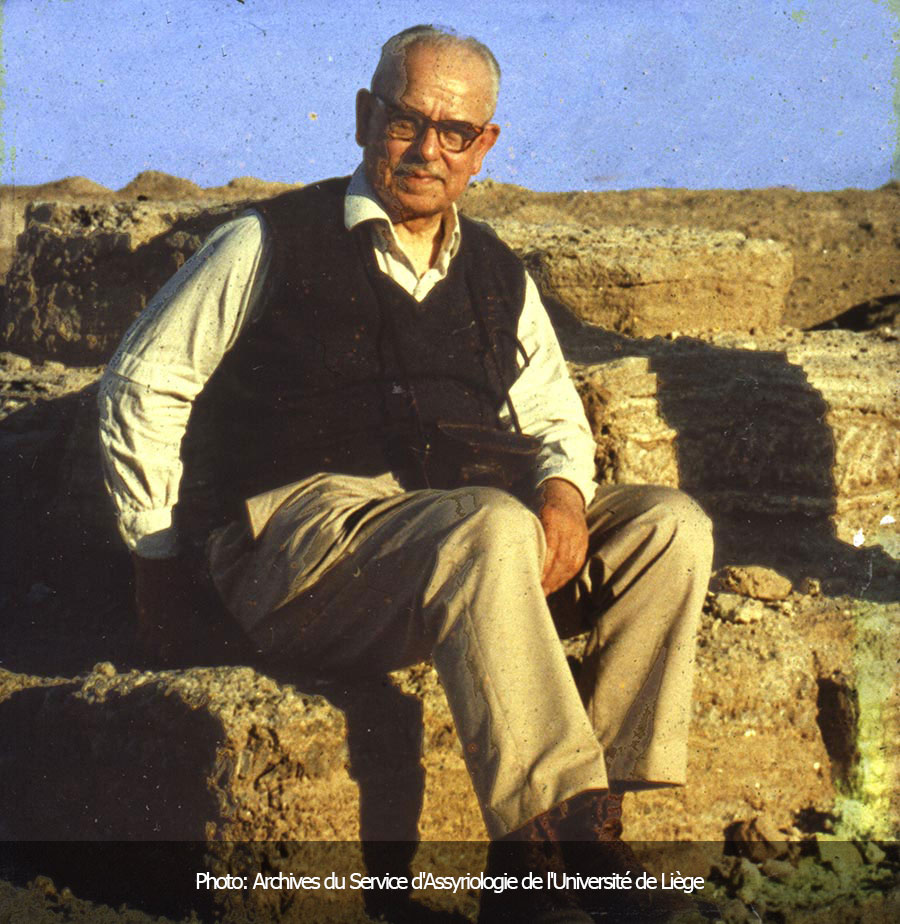
Georges Dossin (1896-1983), Assyrioloog met internationale faam, kan beschouwd worden als de vader van de Belgische Assyriologie.
Hij studeerde eerst bij Prickartz aan de universiteit van Luik en verdiepte zijn kennis in Parijs bij specialisten als V. Scheil en F. Thureau-Dangin. Deze laatste nodigde hem uit om deel te nemen aan zijn opgravingen in Noord Syrië.
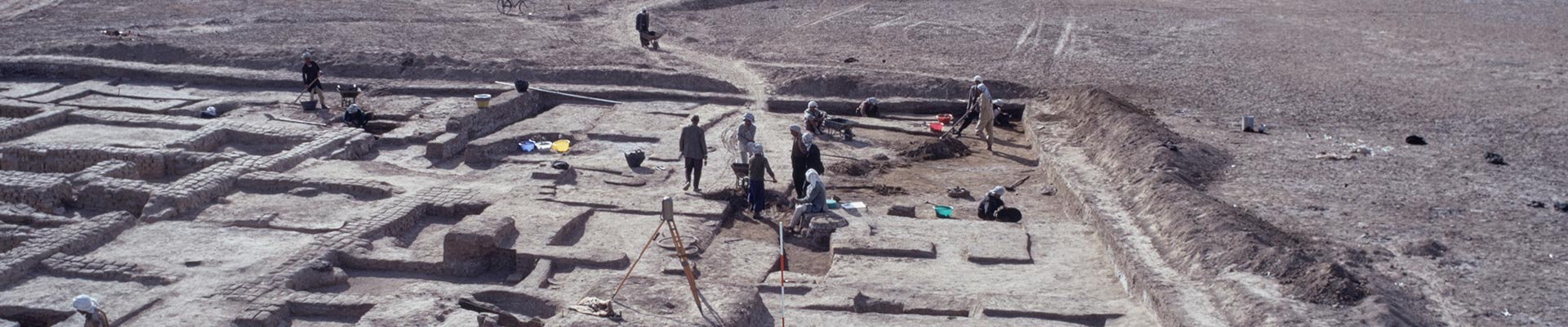
In 1937 werd hij door A. Parrot gevraagd om zijn team te vervoegen voor de opgravingen van Mari, een taak die hij gedurende vele jaren zou volbrengen waarbij hij het merendeel van zijn tijd wijdde aan de studie en publicatie van de teksten uit het rijke paleisarchief van deze site.
Tegelijkertijd doceerde hij Assyriologie en vormde zo de volgende generatie, J.-R. Kupper, A. Finet, L. De Meyer en H. Limet, die op hun beurt Assyriologie doceerden aan verschillende Belgische universiteiten en zo op hun beurt een volgende generatie vormden.
Als een tribuut voor hun leermeester, beslisten Kupper, Finet, De Meyer en D. Homès in 1976 om de Assyriologische Stichting Georges Dossin op te richten.
De bibliografie van Georges Dossin, verzameld door Ph. Talon, werd gepubliceerd in het "Recueil Georges Dossin". Mélanges d’Assyriologie (1934-1959, Leuven 1983 (= Akkadica Supplementum I).
Voor het meest recente overzicht van de Belgische Assyriologie, zie K. De Graef, Tintin in Mesopotamia: the story of Belgian Assyriology (1890-2017), in A. Garcia-Ventura and L. Verderame (Eds.), Following the footsteps of our predecessors : glimpses into the historiography of Ancient Near Eastern studies, Eisenbrauns-Penn State University Press, Pennsylvania, 2018 (in press).