|
Akkadica ![]() Assyriological Center
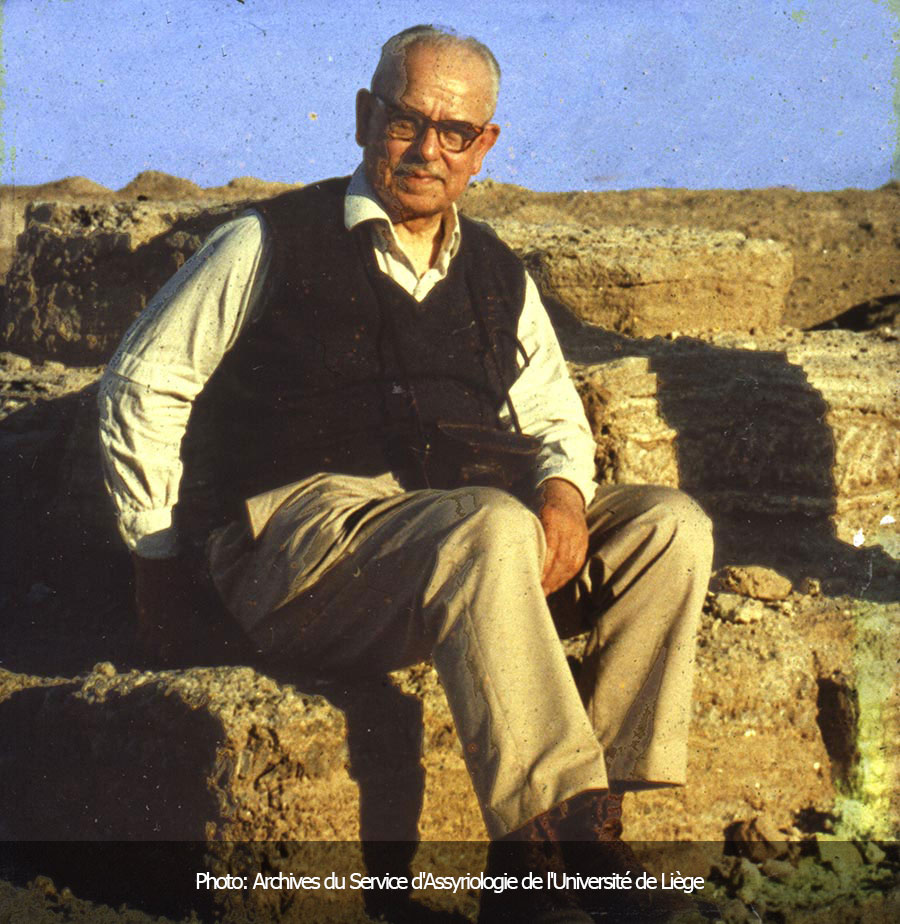
Georges Dossin ![]() |
Conspectus Librorum - Book Review:
Orders: service@harrassowitz.de. For a complete catalogue of titles see also: www.harrassowitz.de/verlag 'Semitic and Assyriological Studies' is dedicated to Pelio Fronzaroli who has been professor of Semitic philology at the University of Florence since 1966. The volume mainly focuses on articles concerning Semitic linguistics and on Assyriology, including Hittitology which was one of the first interests of Fronzaroli. Additionally we are offered a good collection of articles on Aegean philology, Arabic, Aramaic, Hebrew and Biblical Studies, North-West Semitic, Phoenician, South Arabian, Ugaritic, on Near Eastern history and archaeology. Following a table of contents, a foreword by the editor Paolo Marrassini, and a complete list of publications of Fronzaroli, a total number of forty-seven engaging contributions are presented to a specialized audience. These articles, including English, French, German and Italian works, appear in alphabetical order as follows: 1) "A Minoan Inscription specifying contemporary dignitaries" by Kjell Aartun (p. 1-12). The inscription, written in the Minoan script of class A, was discovered on a pithos in the Palace of Phaistos. 2) "I Sostantivi Fenici 'AB e 'AH" by Maria Guilia Amadasi Guzzo (p. 13-26). 3) "In Margine" by Alfonso Archi (p. 27-43), presenting some marginal notes on subjects studied by Fronzaroli when interpreting the documents from Ebla. 4) "La Missione Italiana nel Dhofar (Sultanato dell'Oman): Prospettive per una Ricerca Linguistica by Alessandra Avanzini (p. 44-53). 5) "A Ritual from Archive L.2712 of Ebla" by Maria Gionvanna Biga (p. 54-69, incl. 2 figs.). This article presents an analysis of the text of Tablet TM.75 G. 756 + 771 + 815. 6) "On the Preservation of Ancient forms and Sound Shifts in Frequent Words resisting analogy in Hebrew and Arabic" by Joshua Blau (p. 70-74). 7) "Leopards, Cauldrons, and a beautiful Stone. Notes on some early Syrian texts from Tell Beydar and Ebla" by Marco Bonechi (p. 75-96). 8) "Il cimento dell'Estro e della Ragione: La Dimensione Scribale della Cosiddetta Teodicea Bäbilonese" by Giorgio Buccellati (p. 97-104). 9) "Two Sargonic Tablets mentioning Mesag, Ensi of Umma" by Amalia Catagnoti (p. 105-115, incl. 5 figs.). Catagnoti offers a short study of two Sargonic tablets housed in the British Museum, i.e. BM 140676 (1987-5-16.5), a letter written in Sumerian; and BM 140668 (1987-3-7.1), an administrative text from Umma. 10) "Il Pennsylvania Sumerian Dictionary e il Sumerico di Ebla" by Giovanni Conti (p. 116-135). 11) "Considerazioni sul medico Eblaita e i suoi strumenti di lavoro" by Franco d'Agostino (p. 136-149), divided into the following three paragraphs: "I medici di Ebla: la documentazione"; "Sullo status sociale del medico eblaita" and finally "Alcune considerazioni sugli strumenti di lavoro del medico eblaita". 12) "Horon, der Herr über die Schlangen. Das Verhältnis von Mythos und Beschwörung in KTU 1.100" by Manfried Dietrich and Oswald Loretz (p.150-172). 13) "Enlil, Vater der Götter" by Dietz Otto Edzard (p.173-184). 14) "Semitico, indeuropeo e sostrato indomediterraneo" by Giovanni Garbini (p.185-197). 15) "Die Verehrung des Gottes El unter den Israeliten" by Wolfram Herrmann (p.198-206). 16) "Remarks on the semantics and translation of kim'at in Biblical Hebrew" by Jacob Hoftijzer (p. 207-229). 17) "Significato politico dell'investitura sacerdotale nel regno di Hatti e in alcuni paesi vicino-orientali ad esso soggetti" by Fiorella Imparati (p. 230-242). 18) "La classificazione dell'ugaritico: problema prima storico e poi linguistico" by Felice Israel (p. 243-268). 19) "Il ruolo di Tarhuntašša da Muwatalli II a Šuppiluliuma II" by Anna Margherita Jasink (p. 269-285). 20) "Non-trivial semantic shifts in Semitic. S. Maisel's 'Isosemantic series' applied to anatomic lexicon" by Leonid Kogan and Alexander Militarev (p. 286-300). 21) "Lexikalisches aus Tuttul" by Manfred Krebernik (p. 301-319, incl. 7 figs.). 22) "Les particules du discours dans les texts de la region du Moyen-Euphrate IIe millénaire" by Henri Limet (p. 320-335). 23) " 'Broken' plural in "Aramaic" tribal names " by Edward Lipinski (p. 336-349). 24) "The disgraced commissioner. The turnover in Amarna officialdom" by Mario Liverani (p. 350-354). 25) "Musicians from Hazor at Mari" by Abraham Malamat (p. 355-357). This article documents one of the fifteen letters of Manatan's corpus. The letter reports to Zimri-Lim the return of a caravan, bringing three musicians from Hazor to Mari. 26) "Three Old-Babylonian contracts from the Kingdom of Larsa" by Pietro Mander (p. 358-368, incl. 3 figs.). 27) " 'Genetic subgrouping' in Semitic" by Paolo Marrassini (p. 369-380). 28) "Ishtar of Ebla and Hadad of Aleppo: Notes on terminology, politics and religion of old Syrian Ebla" by Paolo Matthiae (p. 381-402, incl. 10 figs.). 29) "The mountains and the stars" by Piotr Michalowski (p. 403-410). Michalowski presents some comments on the occurrence of the Semitic deity Kabkabum in two incantations written in the Eblaite language. 30) "Les affaires de Monsieur Gida-Na'im" by Lucio Milano (p. 411-429, incl. 1 fig.). 31) "Grammatische Atavismen in Semitischen Sprachen" by Hans-Peter Müller (p. 430-445). 32) "Une formule épistolaire en ougaritique et akkadien" by Dennis Pardee (p. 446-475). 33) "From Akkad to Hattuša : The history of Gurparanzah and the river that gave him its name" by Franca Pecchioli Daddi (p. 476-494). 34) "Un palazzo ritrovato" by Paolo Emilio Pecorella (p. 495-509, incl. 11 figs.). This article focuses on a palace discovered at the site of Tell Barri/Kahat. 35) "Lo specchio dell'anima e il manto di luce nel Testamento di Abramo" by Fabrizio A. Pennacchietti (p. 510-519). 36) "Le lingue semitiche di Ebla, Mari e Tell Beydar nel panorama linguistico del Vicino Oriente antico del III millennio A.C." by Giovanni Pettinato (p. 520-531). 37) "Hittite fragments on the Atrahasis Myth" by Anna Maria Polvani (p. 532-539). 38) "La terminologia amministrativa di Ebla: ŠU-DU8 E TUŠ.LÚxTIL" by Francesco Pomponio (p. 540-559). 39) "La parte alta del corpo nella preistoria della lingue" by Umberto Rapallo (p. 560-584, incl. 2 tabs.). 40) "Semitic and Indoeuropean. A linguisitc study in comparative aspectology" by Frithiof Rundgren (p. 585-599). 41) "Nachrichten an den Palast von Ebla. Eine Deutung von NIG-MUL-(AN)" by Walther Sallaberger (p. 600-625). 42) "Guiseppe nella Genesi ed I fenomeni onirici" by J. Alberto Soggin (p. 626-629). 43) "Akkadische Lexeme im Sumerischen" by Gerd Steiner (p. 630-647). 44) "The use of glosses in Neo-Assyrian letters and astrological reports" by Philippe Talon (p. 648-665). 45) "É = BITUM or = 'À ? About EA in Early Dynastic sources" by Maria Vittoria Tonietti (p. 666-679). 46) "Sulla piu antica storia del dio del vino" by Paolo Xella (p. 680-689). 47) "I prodromi della definizione di verbo performativo nelle grammatiche tradizionali dell'ebraico biblico" by Ida Zatelli (p. 690-697). In addition to the bibliography (by Amalia Catagnoti) covering all publications of Fronzaroli, almost all articles contain useful notes and are concluded with their own list of references. Some contributions also have illustrations which are generally of good quality. The present volume undoubtedly provides an interesting contribution to (specialized) scholars, and some good field examples for future discussions. Ingrid Swinnen Vrije Universiteit Brussel |